


Product details
Overview
Type: Monocrystalline PV module (“mono”)
Brand/Origin: Phoenix, Germany / German‐engineered technology
Power Rating: 250 Watts peak (250 W) under Standard Test Conditions (STC)
Voltage Nominal: 12 Volts system (though actual operating voltage will be higher)
Durability: All‐weather; designed for outdoor exposure (sun, rain, dust)
Warranty: Often ~25 years for output; shorter material warranty (e.g. ~10 years) for construction and components
Typical Electrical Specifications
Here are typical values (some approximate) one might expect for a 250 W monocrystalline panel in a 12 V‐system:
| Parameter | Approximate Value | Notes |
|---|---|---|
| Maximum Power (Pmax) | 250 W | At optimal sunlight, temperature (often 25°C) |
| Voltage at Pmax (Vmp) | ~ 30-32 V | To produce 250W into a 12V battery via charge controller, panel must operate at higher voltage |
| Current at Pmax (Imp) | ~ 8-9 A | 250 / ~30V = ~8-9A |
| Open Circuit Voltage (Voc) | ~ 36-40 V | No load, maximum voltage the panel reaches |
| Short Circuit Current (Isc) | ~ 9-10 A | Maximum current in full light with output shorted |
| Temperature Coefficients | Negative for Pmax & Voc | Power drops with high temperature; panel loses some efficiency when hot |
| Max System Voltage | ~ 600-1000 V DC | Depends on module and junction box rating |
Physical and Construction Features
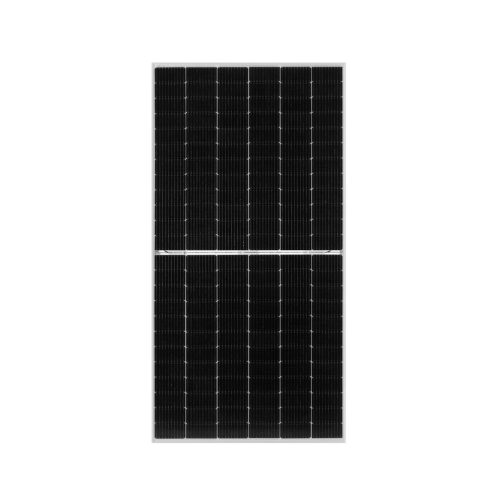
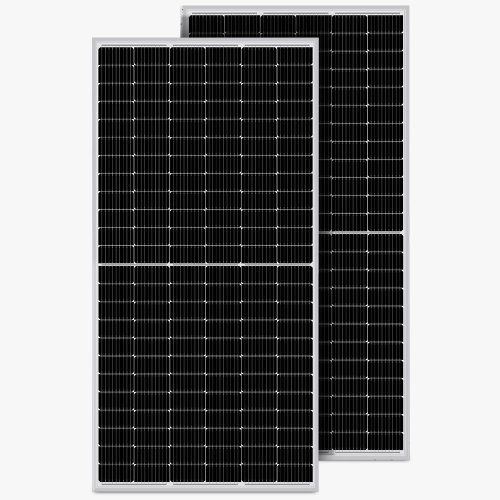
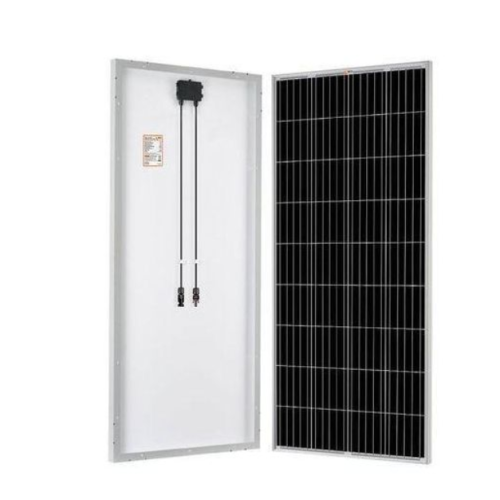
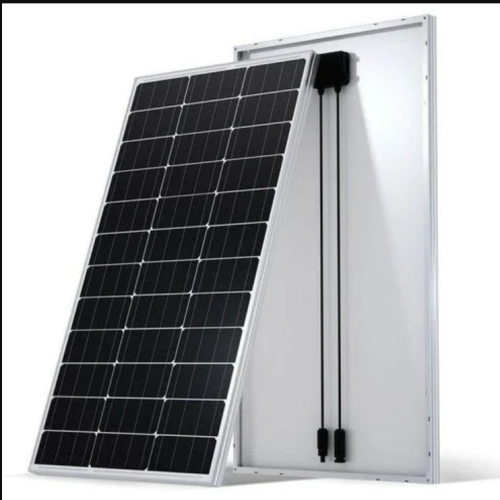
Cells: Monocrystalline; likely ~60 cells or similar, or combinations to achieve needed voltage.
Glass cover: Tempered, anti‐reflective glass to protect cells and improve light transmission.
Frame: Aluminum, anodized or treated for corrosion resistance.
Junction box: IP rated (often IP65 or better), with diodes to reduce shading losses.
Mounting: Standard mounting holes on frame for fixed installation; often with brackets.
Performance & Applications
Suited for small off-grid systems, battery charging (12V), lighting, small DC appliances, or feeding through a charge controller into a battery bank.
In Kenya / equatorial climates: expect good performance due to high sun exposure; performance dips during cloudy or shaded periods.
Need a proper solar charge controller (preferably MPPT) to convert panel voltage to battery voltage efficiently, especially since the panel’s Vmp (~30V) is well above battery voltage (12V).


There are no reviews yet.